
The Ancient Origins of Fragrance
The story of perfume is as old as civilization itself. The word 'perfume' comes from the Latin 'per fumum,' meaning 'through smoke' — a reference to the ancient practice of burning aromatic resins and woods as offerings to the gods. The earliest evidence of perfume use dates back over 4,000 years to ancient Mesopotamia and Egypt, where fragrance was considered sacred and reserved for royalty and religious ceremonies.
Ancient Egypt: The Birthplace of Perfumery
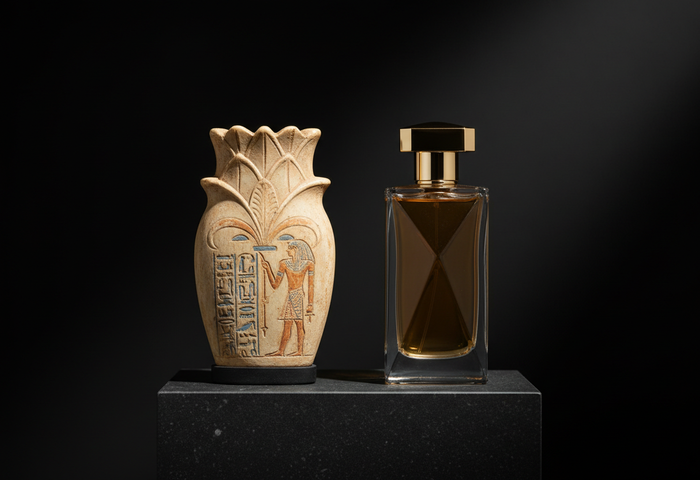
The ancient Egyptians were the true pioneers of perfumery. They used fragrant resins, myrrh, frankincense, and aromatic oils in religious rituals, burial ceremonies, and personal grooming. Cleopatra was famously devoted to fragrance, reportedly soaking the sails of her ships in perfume so that the scent would announce her arrival before she was even visible. Egyptian perfumers were among the most respected artisans in the ancient world.
Ancient Greece and Rome: Fragrance Goes Mainstream
The Greeks and Romans adopted and expanded upon Egyptian perfumery traditions. They developed new extraction techniques and began using fragrance not just for religious purposes but for personal pleasure and social status. Roman bathhouses were scented with aromatic oils, and wealthy Romans would anoint themselves with multiple fragrances throughout the day.
The Islamic Golden Age: The Birth of Modern Perfumery
The most significant advancement in perfumery came during the Islamic Golden Age (8th-13th centuries). The Persian physician Avicenna is credited with perfecting the distillation process, which allowed for the extraction of pure essential oils and the creation of alcohol-based perfumes. This revolutionary technique forms the foundation of modern perfumery.
Renaissance Europe: Perfume Becomes Fashion
During the Renaissance, perfume became an essential element of European court life. Catherine de Medici brought Italian perfumers to France when she married King Henry II, establishing France as the center of the perfume world — a position it still holds today. The town of Grasse in southern France became the perfume capital of the world, renowned for its fields of jasmine, rose, and lavender.
The 20th Century: The Golden Age of Designer Fragrance
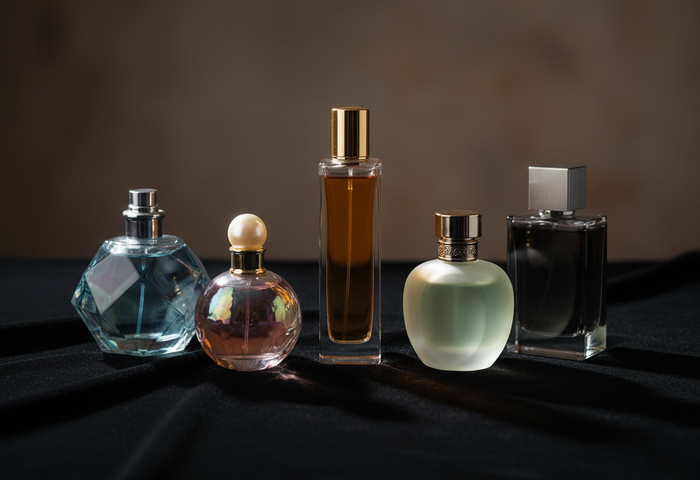
The 20th century saw the rise of the great fashion houses and their iconic fragrances. Chanel No. 5 (1921) revolutionized perfumery by introducing synthetic ingredients, creating a new kind of abstract, modern fragrance. The decades that followed saw legendary creations from Dior, Givenchy, Yves Saint Laurent, Calvin Klein, and Ralph Lauren — many of which remain bestsellers today.
Modern Perfumery: Innovation Meets Tradition
Today's perfumery is a fascinating blend of ancient tradition and cutting-edge science. Modern perfumers, known as 'noses,' train for years to develop their olfactory skills and create fragrances that tell stories, evoke emotions, and capture moments in time. The industry continues to evolve with sustainable sourcing, innovative ingredients, and personalized fragrance experiences.
Experience Fragrance History at World Super Store
Many of the legendary fragrance houses mentioned in this history — Givenchy, Yves Saint Laurent, Calvin Klein, Ralph Lauren, and more — are available at World Super Store. Wear a piece of fragrance history and discover why these iconic scents have stood the test of time.